
12.11.2026.
Second Economic Forum of the University of Zagreb Held
The Second Economic Forum of the University of Zagreb under the title "Research and Innovation Infrastructure for the Future of Croatia" was held yesterday in the ceremonial hall of the Regional Centre for Entrepreneurial Learning for South-East Europe (SEECEL).
The Economic Forum was organised as part of the University of Zagreb Week, a series of events held from 3 to 14 November to mark the beginning of the 358th academic year, which shows various aspects of the activities of the largest and oldest university in the Republic of Croatia to both the university community and the general public.
Rector of the University of Zagreb, Prof. Stjepan Lakušić, PhD, emphasised that the development of research and innovation infrastructure is one of the key prerequisites for strengthening Croatia’s competitiveness, technological independence, and long-term economic growth. He highlighted the need for stable, long-term investment in research infrastructure, closer cooperation between science and industry, the development and retention of skilled professionals, and stronger participation of Croatian institutions in European and international research projects. He particularly highlighted the strategic role of the University of Zagreb and the importance of developing research and innovation campuses, with the Borongaj Campus representing a significant development opportunity for Croatia.
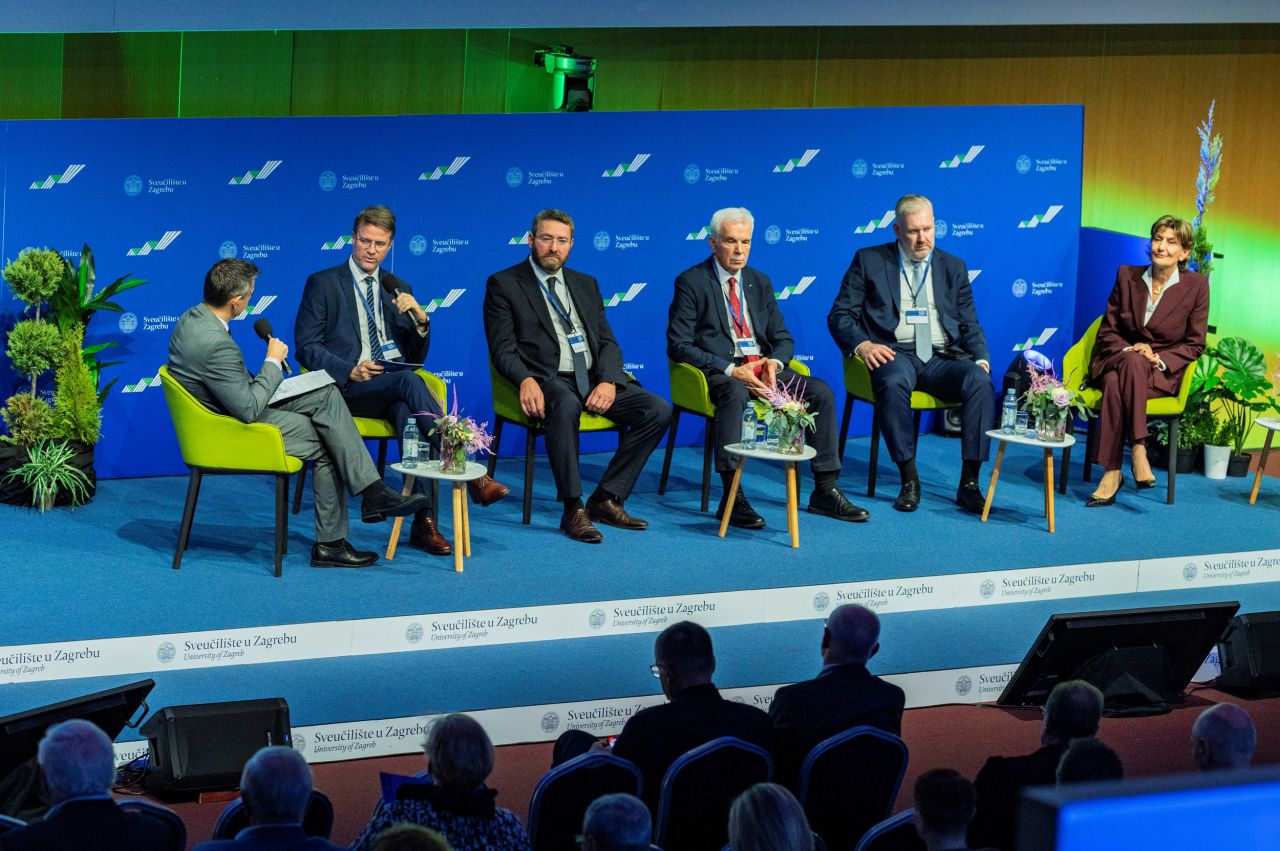
The development of scientific infrastructure for Croatia’s future was the topic of the first panel, which featured Rector Prof. Stjepan Lakušić, PhD, alongside Siniša Krajnović, PhD, President of the Management Board of Ericsson Nikola Tesla, Matej Bule, State Secretary at the Ministry of Finance, Domagoj Mikulić, State Secretary at the Ministry of Regional Development and EU Funds, and Biljana Kulišić, PhD, expert in the field of renewable energy systems and strategic foresight.
During the discussion, the panellists emphasised that scientific infrastructure entails not only the construction of new facilities and the acquisition of modern equipment, but also the creation of an environment that encourages connections among scientists, students, and business professionals.
As a representative of the Croatian Bank for Reconstruction and Development (HBOR), Alan Herjavec, MSc, Member of the Management Board, participated in the second panel discussion, addressing the financing opportunities available for research infrastructure. Joining him on the panel were Prof. Tomislav Josip Mlinarić, PhD, Vice-Rector of the University of Zagreb for Innovation, Technology Transfer and Cooperation with Industry, Assistant Professor Zvonimir Savić, PhD, Special Adviser to the Prime Minister of the Republic of Croatia for Economic Affairs, economic expert Mladen Vedriš, PhD, and Martina Dalić, PhD, President of the Management Board of Podravka.
The panellists highlighted the need to align future infrastructure projects with national development priorities and European strategic frameworks. They also discussed investment selection criteria, which should take into account scientific and technological excellence, financial and organisational sustainability, and broader socio-economic impacts.
It was also emphasised that financing should not be regarded as an insurmountable obstacle, as a variety of funding sources are available, ranging from national and European funds to development banks and private capital. However, their effective utilisation requires a clearly defined vision and set of priorities, political and social consensus, as well as the establishment of appropriate governance and organisational mechanisms.
The event also featured the ceremonial presentation of the Economic Excellence Award - the Academic Oscar, which is granted in recognition of the most successful collaboration achieved during the previous year between the faculties and academies of the University of Zagreb and the business sector. This year’s award was presented to Podravka d.d.
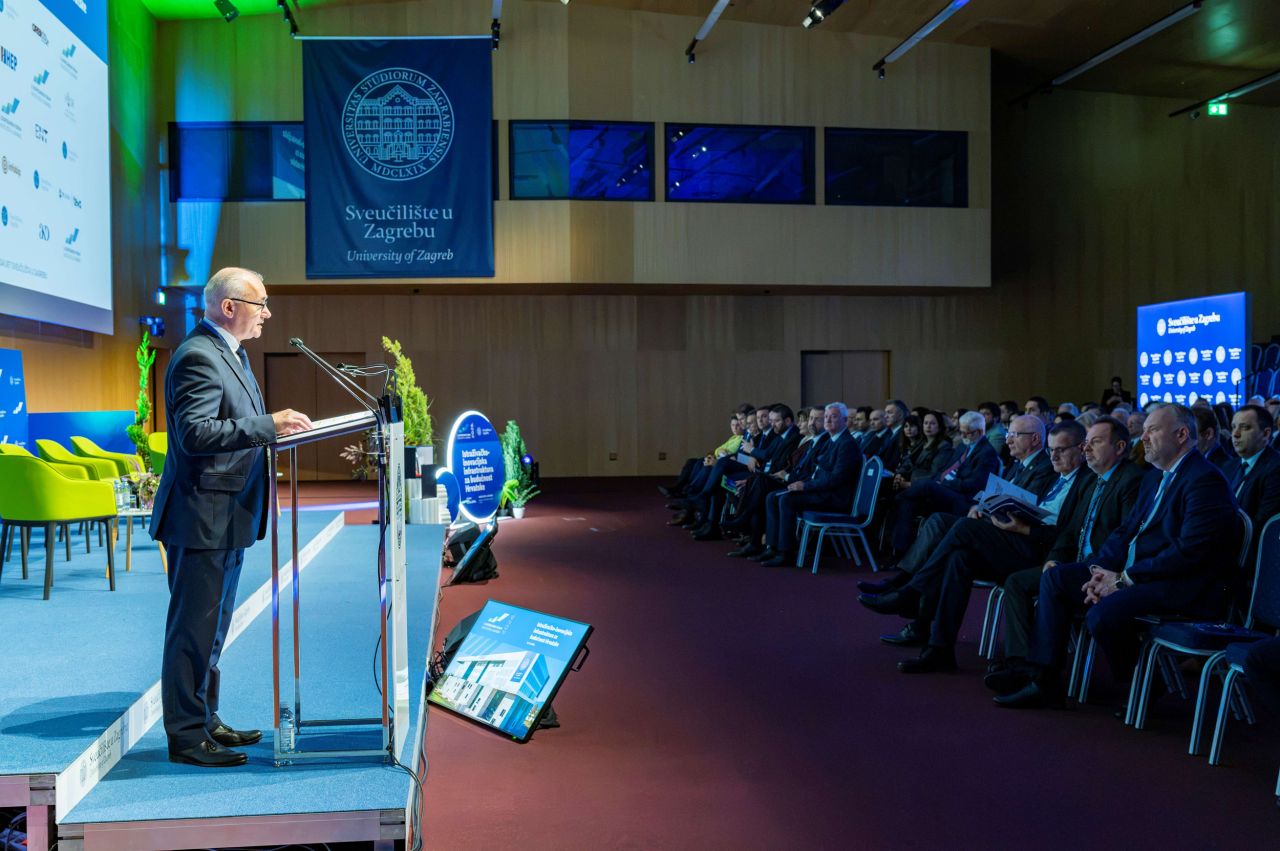
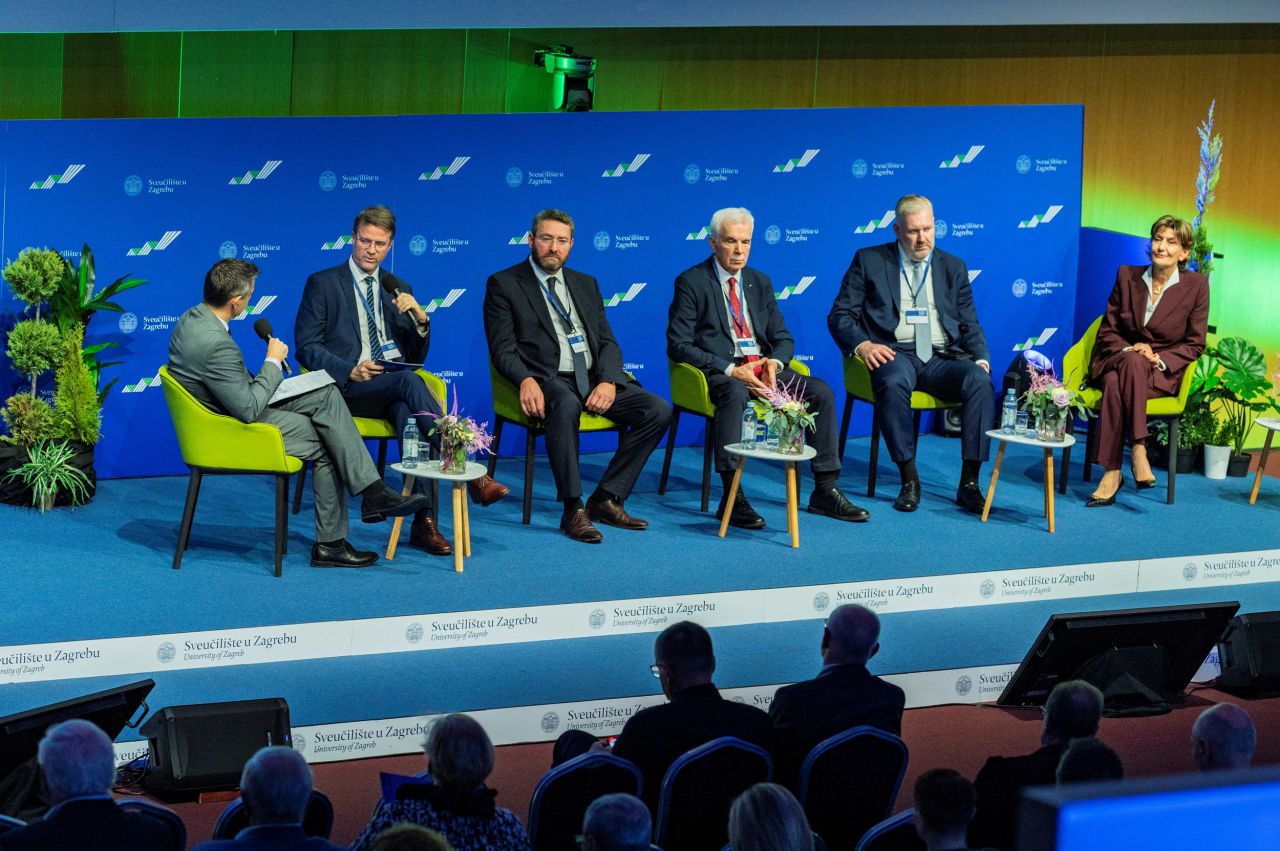
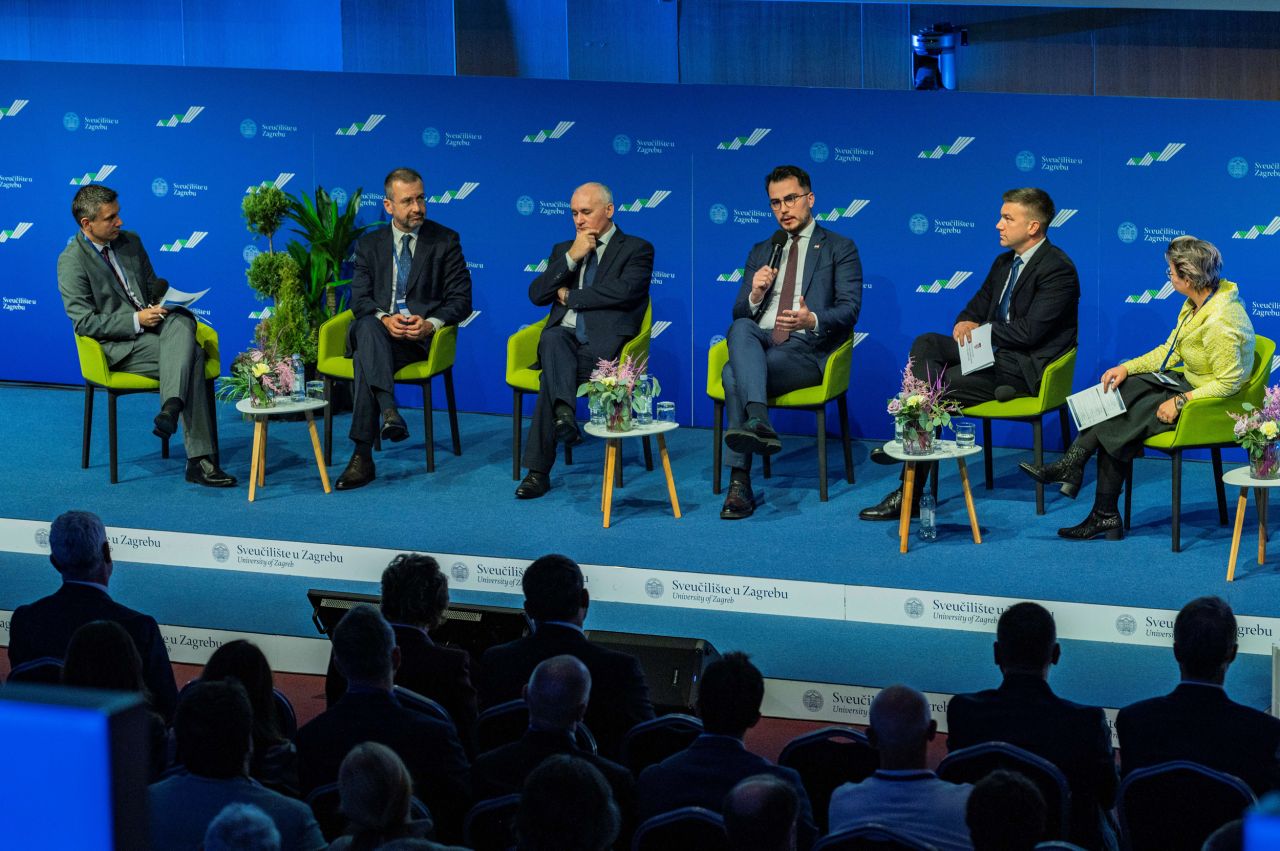
PHOTO: University of Zagreb
Second Economic Forum of the University of Zagreb Held
The Second Economic Forum of the University of Zagreb under the title "Research and Innovation Infrastructure for the Future of Croatia" was held yesterday in the ceremonial hall of the Regional Centre for Entrepreneurial Learning for South-East Europe (SEECEL).
The Economic Forum was organised as part of the University of Zagreb Week, a series of events held from 3 to 14 November to mark the beginning of the 358th academic year, which shows various aspects of the activities of the largest and oldest university in the Republic of Croatia to both the university community and the general public.
Rector of the University of Zagreb, Prof. Stjepan Lakušić, PhD, emphasised that the development of research and innovation infrastructure is one of the key prerequisites for strengthening Croatia’s competitiveness, technological independence, and long-term economic growth. He highlighted the need for stable, long-term investment in research infrastructure, closer cooperation between science and industry, the development and retention of skilled professionals, and stronger participation of Croatian institutions in European and international research projects. He particularly highlighted the strategic role of the University of Zagreb and the importance of developing research and innovation campuses, with the Borongaj Campus representing a significant development opportunity for Croatia.
The development of scientific infrastructure for Croatia’s future was the topic of the first panel, which featured Rector Prof. Stjepan Lakušić, PhD, alongside Siniša Krajnović, PhD, President of the Management Board of Ericsson Nikola Tesla, Matej Bule, State Secretary at the Ministry of Finance, Domagoj Mikulić, State Secretary at the Ministry of Regional Development and EU Funds, and Biljana Kulišić, PhD, expert in the field of renewable energy systems and strategic foresight.
During the discussion, the panellists emphasised that scientific infrastructure entails not only the construction of new facilities and the acquisition of modern equipment, but also the creation of an environment that encourages connections among scientists, students, and business professionals.
As a representative of the Croatian Bank for Reconstruction and Development (HBOR), Alan Herjavec, MSc, Member of the Management Board, participated in the second panel discussion, addressing the financing opportunities available for research infrastructure. Joining him on the panel were Prof. Tomislav Josip Mlinarić, PhD, Vice-Rector of the University of Zagreb for Innovation, Technology Transfer and Cooperation with Industry, Assistant Professor Zvonimir Savić, PhD, Special Adviser to the Prime Minister of the Republic of Croatia for Economic Affairs, economic expert Mladen Vedriš, PhD, and Martina Dalić, PhD, President of the Management Board of Podravka.
The panellists highlighted the need to align future infrastructure projects with national development priorities and European strategic frameworks. They also discussed investment selection criteria, which should take into account scientific and technological excellence, financial and organisational sustainability, and broader socio-economic impacts.
It was also emphasised that financing should not be regarded as an insurmountable obstacle, as a variety of funding sources are available, ranging from national and European funds to development banks and private capital. However, their effective utilisation requires a clearly defined vision and set of priorities, political and social consensus, as well as the establishment of appropriate governance and organisational mechanisms.
The event also featured the ceremonial presentation of the Economic Excellence Award - the Academic Oscar, which is granted in recognition of the most successful collaboration achieved during the previous year between the faculties and academies of the University of Zagreb and the business sector. This year’s award was presented to Podravka d.d.
PHOTO: University of Zagreb